
Microscopes
The one tool you'll find across biology, physics, chemistry, zoology, earth sciences — and even on the International Space Station — is the microscope.
The Museum cares for a varied collection of these tools of scientific study.
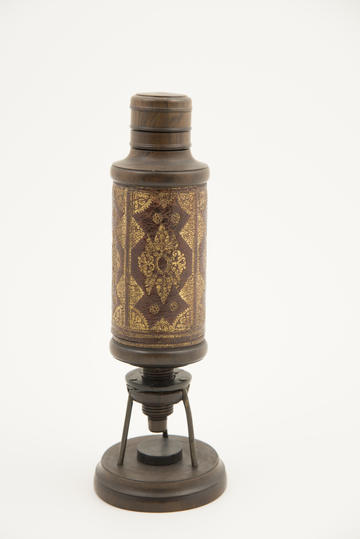
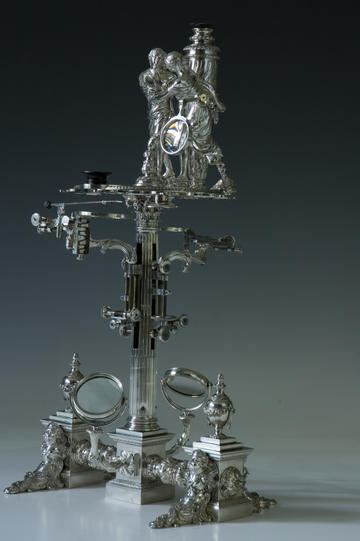
The instruments range from the early days of microscopic investigations dating from the 1600s (reflected in the Royal Microscopical Society collections and the Orrery collection) to the sharp magnification of high-quality instruments from the mid-1900s (represented in the Paul Michael Greenbaum collection).
They include microscopes used by scientists, travellers — and even a king:

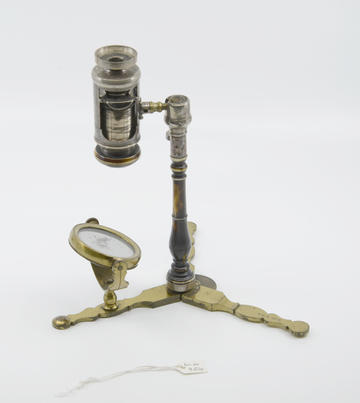
The ingenuity and skill of makers from the 1800s — such as Andrew Ross, John Swift, F.W. Sharpus and W. Watson — have pride of place in the Greenbaum collection. Their work reflects the craft, commerce and imperial networks that shaped the production and circulation of scientific instruments across the 1800s and 1900s.
Visit the Museum, online or in person, to explore the scientific instrument that shaped what we can see, drove forward scientific discoveries, and allowed people to look down the lens at a magnified world.
Highlights from the Greenbaum collection
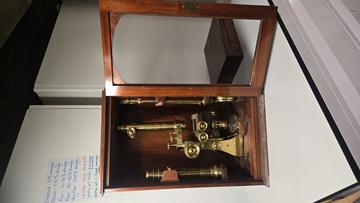
F W Sharpus monocular/binocular microscope with accessory set. Greenbaum (inv. 18796.23)
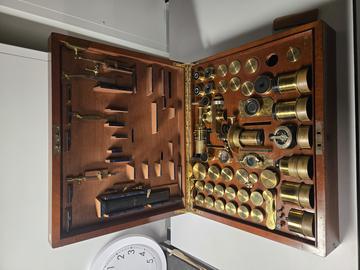
F W Sharpus monocular/binocular microscope (accessory set). Greenbaum (inv. 18796.23)
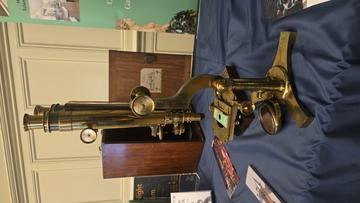
J.B Dancer Compound microscope with numerous slides inv. 18796.29

